





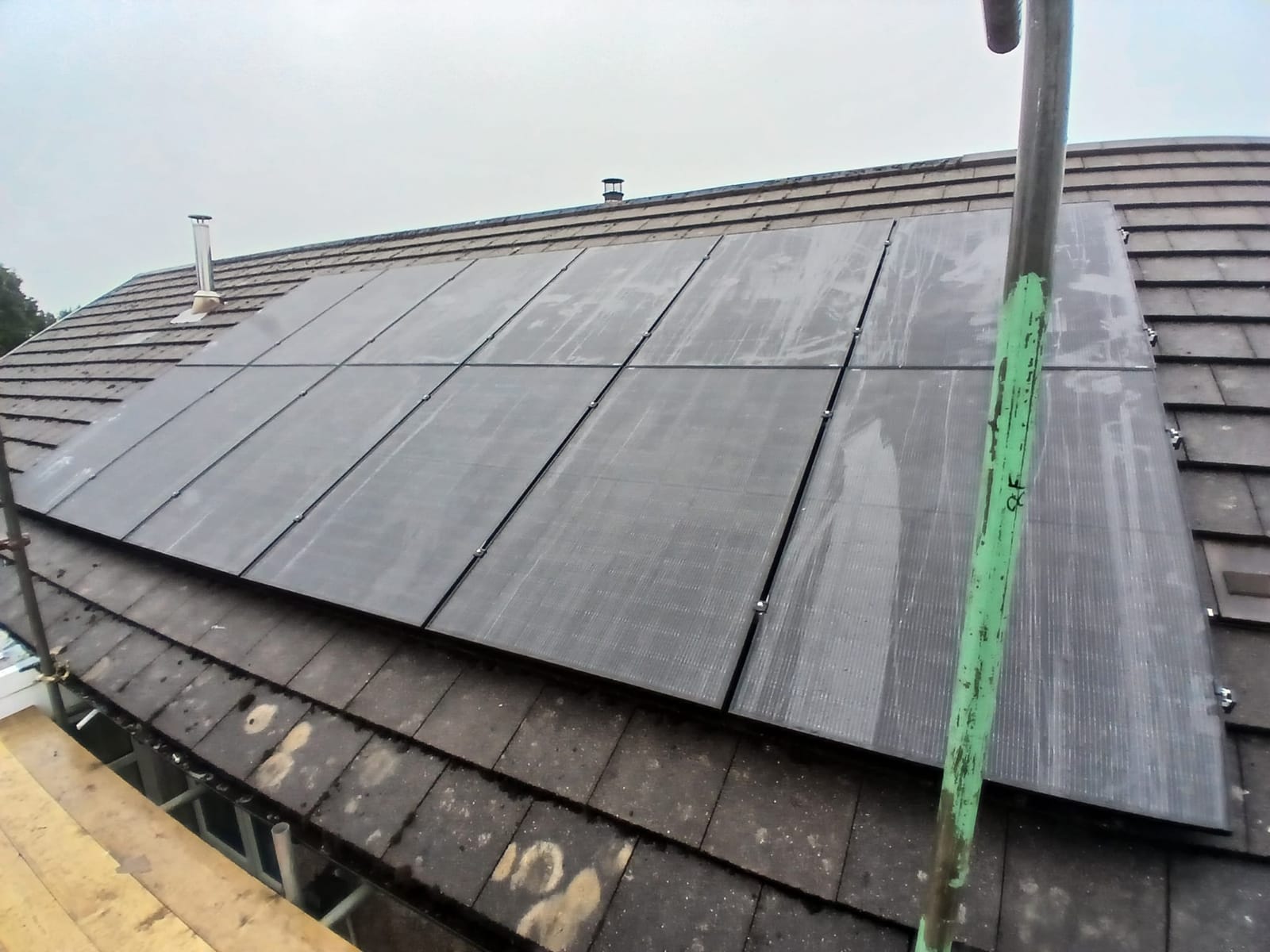
Solar panels for logistics: turning underused warehouse roofs into working assets
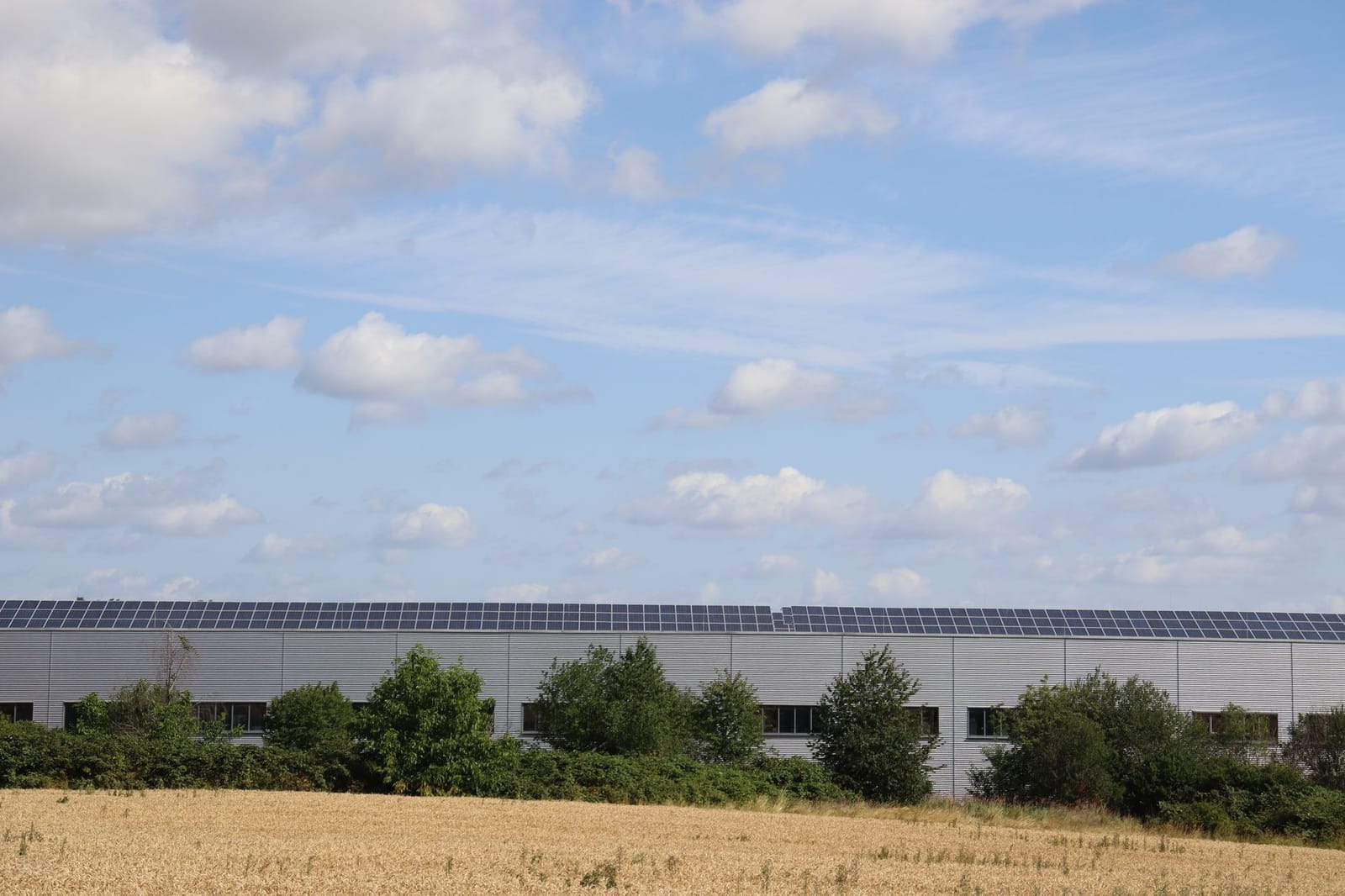
Solar panels for logistics are one of the few large, controllable savings left on a logistics P&L. The UK logistics estate is the biggest underused renewable resource in the country, over 600 million square feet of clear-span steel-portal roof. For logistics operators, third-party logistics (3PL) providers, last-mile depots and the distribution networks that connect them, that roof sits above a daytime electrical load that solar matches almost perfectly: MHE charging, conveyors, refrigeration, robotics and high-bay lighting all draw power through the working day, exactly when the panels generate, so each kilowatt-hour consumed displaces grid electricity at full retail price plus the network charges on top. We design, fund and deliver solar panels for logistics across the M1, M6 and A1 corridors, sizing each system to what the building genuinely consumes.
The timing has rarely been better. TNUoS and BSUoS network charges have risen between 40% and 80% since 2022 and land straight on the P&L, while customer net-zero mandates such as the Amazon Climate Pledge, Tesco net zero and Unilever's climate transition plan flow down to operators and tenants. A bare roof is now a competitive risk, a point bodies such as Logistics UK increasingly press.
How we size systems for logistics operators
Sizing follows the load, not the roof outline. Systems range from a 100 to 400 kW last-mile depot up to a 1,000 to 5,000 kW port or strategic warehouse, with mid-estate distribution centres usually in the 500 to 3,000 kW band (roughly 920 to 5,500 panels across 3,000 to 18,000 square metres of roof) generating around 460,000 to 2.75 million kWh a year. Roof area is rarely the binding constraint; the real limits are your daytime baseload and the capacity your DNO will allow, which is why we pull half-hourly meter data first. For 24/7 cold chain and multi-shift fulfilment, self-consumption above 80% is achievable so we size aggressively; for daytime-only sites we model whether a battery earns its place.
Costs, payback and tax relief
A typical warehouse install runs £350,000 to £2.4m at roughly £700 to £900 per kW, with last-mile depots from £90,000 to £340,000 and large distribution centres often at £600 per kW at scale. Simple payback sits near 5 to 5.5 years across most of the estate, falling to around 4.5 years for cold storage, after which the electricity is effectively free. The biggest lever is tax: solar PV qualifies as plant and machinery, so the 100% Annual Investment Allowance lets most businesses write off the full cost in year one up to the £1m cap (worth up to a quarter of the project value back as tax saved for a limited company), with a 50% First Year Allowance above that. These figures are illustrative. Our cost guide sets out worked numbers and compares owning the system against a PPA.
Funding routes for logistics solar
A building inside a designated Freeport or Investment Zone (Freeport East at Felixstowe and Harwich, Liverpool City Region, Teesside, Humber and others) may qualify for 100% Enhanced Capital Allowances on new plant and machinery. For leased buildings, the Green Lease Clause and tenant capital recovery route unlocks the work: we provide a lease addendum aligned with the BBP Green Lease Toolkit that most institutional landlords recognise. The Smart Export Guarantee pays for surplus export (around 4 to 15p per kWh as of 2026), though self-consumption dominates on a busy site, and the Industrial Energy Transformation Fund is worth checking where a site handles food or chilled product. The funding page walks through each scheme.
Compliance and sector considerations
The compliance picture is well understood, which is why insurers are comfortable with the large-roof PV risk profile today. Sprinkler clearances are mandatory, so we design to LPC standards (1m to the deflector, 0.6m at high-bay) around your sprinkler heads, with insurer pre-design review carried out as standard before fabrication. Wind loading is designed to BS EN 1991-1-4, most roofs fall under Permitted Development (Class A Part 14, GPDO 2015), and a G99 grid application applies above 17 kW per phase. Cold-chain sites carry two further points: F-gas Regulation 2014/517 governs the refrigeration plant, and roof penetration detailing must protect the insulated panel integrity. We hold MCS, NICEIC, RECC, TrustMark and ISO 9001, 14001 and 45001 accreditation.
How we approach the project
We start with your half-hourly meter data, not a roof drawing, because sizing for genuine self-consumption is what makes solar panels for logistics pay. We carry out roof and structural checks early, submit the G99 application to start the connection clock, and run insurer pre-design review before fabrication. You receive a fixed-price proposal backed by an insurance-backed workmanship warranty, with auditable Scope 2 evidence for your customers' audit packs. The roof install happens above your live operation, so MHE, picking and despatch continue normally; the only outage needed is the final grid synchronisation, scheduled for a weekend.
An illustrative worked example
As an illustrative composite: a national 3PL running a 280,000 square foot distribution centre near the M1 corridor, paying around £620,000 a year for power on a 15-year FRI lease, installed roughly 1.18 MW (about 2,170 panels) generating around 1.09 million kWh. The scheme was PPA-funded with zero capex, self-consumption sat near 84%, and the annual saving was in the order of £245,000 for a payback close to 5.1 years. The figures are illustrative and depend entirely on your site, roof, load profile, tariff and lease.
The approach differs by building type: see distribution centre solar and solar for cold storage warehouses. When you are ready, review the cost guide and funding routes, read the logistics solar FAQs, then request a free feasibility.